
Performance Measurement
Explore the range of performance tests available at TP to help our student-athletes track and benchmark their progress, as well as the recommended training programmes designed to elevate their game.
Last updated on 7 August 2026
Performance Measurement
Performance testing and monitoring help our student-athletes and sports teams to understand where they stand — both in tracking their own progress over time, and in comparison with others who play in a similar role or capacity.
Sports teams can arrange for suitable performance testing through their staff advisors. We also work closely with our coaches and captains to recommend training programmes to enhance athlete performance.
In general, we offer the following services to meet our student-athletes’ needs:
Taping workshops
Strength & Conditioning programming
Ice baths (During competition seasons)
Physiotherapy consultation (During competition seasons)
Mental skills workshops/coaching
Types of Performance Tests

Body Composition
This test is administered using a Bioelectrical Impedance Analysis (BIA) machine, which sends small electrical currents through the body. Different bodily tissues (such as muscle, fat and bone) conduct electricity differently due to variations in water content, so the current passes through them at different speeds.
Hydration status can affect BIA results and should therefore be standardised as far as possible. For female athletes, fluctuations in hydration during menstruation should also be considered when scheduling BIA assessments. In addition, participants should avoid eating and strenuous exercise for two to four hours before testing, as research suggests these can reduce impedance.
BIA is useful for athletes to monitor body composition changes with training, such as reduced fat mass and increased fat-free mass. It is also useful for managing weight loss or gain in a healthy way when preparing to qualify for specific competition categories
.jpg)
Running-Based Anaerobic Sprint Test
The Running-Based Anaerobic Sprint Test (RAST) is used to assess an athlete’s anaerobic power and capacity. It consists of six maximal sprints over a 35-metre distance, with a 10‑second recovery period between each sprint.
The RAST is suitable for athletes who compete in running-based sports that require repeated short bursts of high-intensity effort, such as soccer and basketball.
.png)
Yo-Yo Intermittent Recovery Test
The Yo-Yo Intermittent Recovery (YYIR) Test assesses an athlete’s ability to perform repetitive high‑intensity aerobic exercise. In YYIR Level 1, athletes run back and forth between two cones at a starting speed of 10 km/h, with 10 seconds of rest between each shuttle. The speed increases progressively, and the test stops when the athlete misses the cone twice consecutively.
Research has shown the YYIR test to be a valid and reliable indicator of high‑intensity aerobic capacity and VO₂ max across different sports and competition levels. It is a suitable assessment tool for athletes competing in sports that demand repeated high‑intensity aerobic efforts.
.png)
Lower Body Power
The lower body power test uses a Vertec device to measure the difference between an athlete’s standing and vertical jump heights. Vertical jump height has been shown to correlate with maximal strength and sprint performance.
It is a suitable assessment tool for athletes in sports where explosive vertical power and jumping height are important performance factors.
Upper Body Power
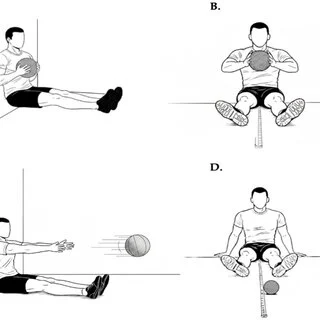
The upper body power test measures upper body power by recording the maximum horizontal distance a medicine ball is thrown from a seated position. It is a suitable assessment for athletes whose sports demand explosive upper body power.
Illinois Agility Test
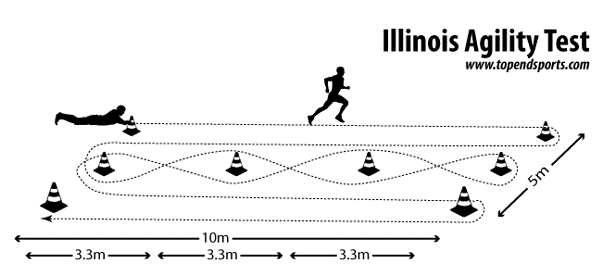
The Illinois Agility Test is used to assess agility by measuring the fastest possible time taken to complete a 10m x 5m course, which involves acceleration and multiple changes of direction around a set of cones.
This test is a suitable assessment for athletes who compete in sports that require frequent, high-speed changes of direction.